

 kamran sharief
 The F6K-ZOP3.2.03.5 model has recently attracted attention across technology blogs and online discussions because of its structured naming convention and references to enterprise and industrial systemsThere’s no official press release, or verifiable public documentation from any established manufacturer labelling it as a commercial product; nonetheless it’s frequently discussed online as the model designation within a class in which versioning information, a certain family of embedded and industrial software, control systems, or the like are referenced under an identifier and as a machine rather than consumer electronic equipment.
Do I know what a F6K-ZOP3.2.03.5 designation refers to? Well, I haven’t worked much in tech and even if, would I? Unless I read a manual, configuration log or software repository concerning that hardware/software (and its versions and build number) that I do, I would probably know something, that somebody knows that about it… So this is a guide on what model designations as F6K-ZOP3.2.03.5 look like and why this nomenclature is standard.
Table of Contents
What Is the F6K-ZOP3.2.03.5 Model?
The F6K-ZOP3.2.03.5 model appears to follow a structured technical naming format commonly used for software builds, firmware releases, industrial equipment, or proprietary enterprise systems.
Instead of serving as a consumer-friendly product name, identifiers like this are generally designed for:
- Internal version tracking
- Software compatibility
- Firmware identification
- Hardware revisions
- Enterprise deployment management
- Configuration control
While multiple websites discuss the identifier, none cite an official manufacturer or primary technical documentation. It is therefore best understood as a technical model identifier rather than a verified commercial product.
Understanding the Naming Structure
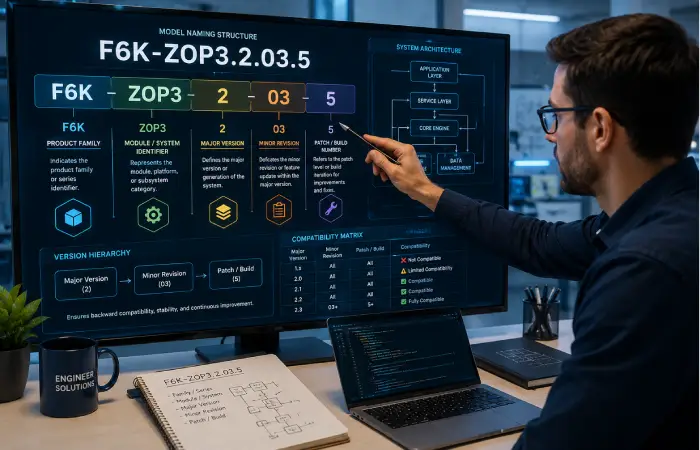
Technical identifiers often follow predictable patterns.
| Component | Possible Meaning |
| F6K | Product family or project series |
| ZOP | Module or subsystem identifier |
| 3.2 | Major software generation |
| 03 | Minor feature revision |
| 5 | Patch or maintenance release |
This style of naming is widely used because it allows engineers to identify compatibility and update history quickly.
Why Technical Model Numbers Matter
Modern organizations manage thousands of software versions and hardware configurations simultaneously.
Using structured model numbers helps:
- Prevent installation errors
- Track firmware updates
- Maintain compatibility
- Simplify troubleshooting
- Organize product revisions
- Improve quality assurance
Without standardized identifiers, maintaining enterprise systems would become significantly more difficult.
Common Environments Where Similar Model Numbers Appear
Although the exact origin of the F6K-ZOP3.2.03.5 model is unverified, identifiers with similar structures are commonly found in:
Embedded Systems
Manufacturers frequently assign coded identifiers to embedded controllers and firmware packages.
Examples include:
- Smart appliances
- Medical equipment
- Industrial controllers
- Network hardware
Industrial Automation
Factories often use coded model numbers to distinguish equipment revisions.
These identifiers help engineers:
- Track maintenance
- Install updates
- Verify compatibility
- Replace components accurately
Software Development
Developers commonly assign structured version identifiers throughout software development.
These indicate:
- Major releases
- Feature updates
- Bug fixes
- Security patches
- Internal testing versions
Cloud Infrastructure
Enterprise cloud platforms also rely on structured identifiers for:
- Service deployments
- Configuration management
- Container images
- API releases
Possible Features Associated with Similar Technical Models
Although no official specifications exist for the F6K-ZOP3.2.03.5 model, discussions about comparable technical identifiers commonly reference capabilities such as modular deployment, compatibility tracking, and integration with enterprise workflows. These descriptions should be viewed as general characteristics of structured technical models, not confirmed features of this specific identifier.
Key Advantages of Structured Model Identification
Organizations rely on structured identifiers because they simplify technology management throughout a product’s lifecycle.
Some of the primary advantages include:
- Easy version identification
- Faster troubleshooting
- Improved update management
- Better hardware compatibility tracking
- Simplified inventory management
- Efficient documentation
- Reduced deployment errors
- Streamlined technical support
These benefits are particularly valuable in enterprise environments where multiple versions of hardware and software may be deployed simultaneously. For more related articles visit our website
Possible Applications
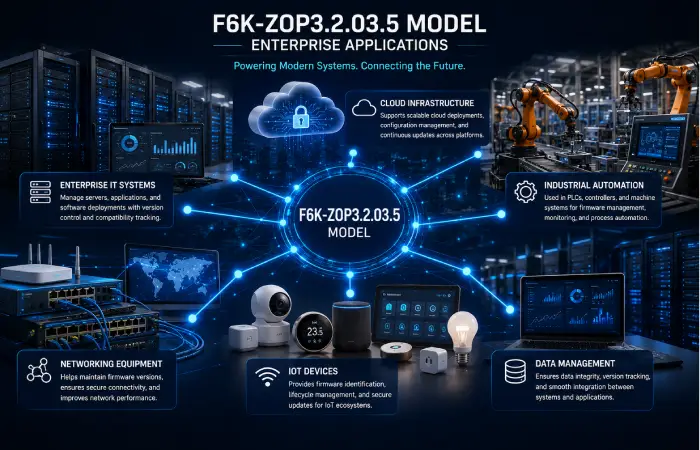
Although the F6K-ZOP3.2.03.5 model has not been verified as a specific commercial product, structured identifiers like this are commonly used across several industries.
Enterprise IT Systems
Large organizations often assign version codes to servers, applications, and internal software packages.
These identifiers help administrators:
- Monitor deployments
- Roll back updates
- Track security patches
- Maintain version consistency
Industrial Automation
Manufacturing facilities frequently label automation equipment with structured model numbers.
Typical uses include:
- PLC controllers
- Machine firmware
- Sensor modules
- Production monitoring systems
Version tracking helps engineers quickly identify compatible components during maintenance.
Networking Equipment
Network devices such as routers, switches, gateways, and firewalls commonly use firmware identifiers similar to the F6K-ZOP3.2.03.5 naming format.
Administrators use these identifiers to:
- Install the correct firmware
- Verify software compatibility
- Troubleshoot connectivity issues
- Maintain secure infrastructure
Embedded Electronics
Embedded devices often include internal firmware identifiers for quality control and lifecycle management.
Examples include:
- Smart home devices
- Consumer electronics
- Automotive systems
- Medical instruments
- IoT sensors
Benefits of Standardized Model Numbers
A structured identification system offers several operational advantages.
Better Asset Management
Organizations can quickly locate and identify specific versions of hardware or software.
Easier Documentation
Technical manuals become easier to organize when every version has a unique identifier.
Improved Support
Support teams can diagnose issues more efficiently when users provide the correct model or version number.
Simplified Updates
Engineers can determine whether an update applies to a particular revision without ambiguity.
How to Verify a Technical Model Number
If you encounter a model identifier such as F6K-ZOP3.2.03.5, it’s good practice to verify it before relying on information found online.
You can:
- Check the manufacturer’s official documentation.
- Review firmware release notes.
- Search technical support portals.
- Consult product manuals.
- Compare information across trusted technical resources.
- Contact the vendor directly if necessary.
Because there is no confirmed public manufacturer for the F6K-ZOP3.2.03.5 identifier, any technical claims should be cross-checked with authoritative sources before use.
Common Misconceptions
Several misconceptions can arise when unusual model identifiers appear online.
It Must Be a Consumer Product
Not necessarily. Many identifiers are intended only for internal engineering or enterprise use.
Every Website Provides Official Information
Some websites publish speculative or AI-generated content without referencing a manufacturer. Always verify details with primary sources whenever possible.
Model Numbers Always Reveal Product Specifications
While version numbers may suggest release history, they do not always indicate capabilities or features.
Best Practices When Working with Technical Identifiers
Professionals should:
- Record the complete identifier accurately.
- Avoid omitting revision numbers.
- Verify compatibility before installing updates.
- Keep documentation up to date.
- Maintain version histories for future reference.
These practices reduce the likelihood of deployment or maintenance errors.
Frequently Asked Questions
What is the F6K-ZOP3.2.03.5 model?
Based on publicly available information, it appears to be a structured technical identifier rather than a verified commercial product from a recognized manufacturer.
Is it a software version?
Possibly. Similar naming conventions are commonly used for software, firmware, and enterprise systems, though no official documentation confirms this specific identifier.
Can I download it?
There is no verified official download associated with the F6K-ZOP3.2.03.5 model. Only download software or firmware from official vendor sources.
Why do companies use complex model numbers?
They help identify versions, maintain compatibility, track updates, and support troubleshooting.
Is there official documentation?
At the time of writing, no publicly verifiable manufacturer documentation specifically describing the F6K-ZOP3.2.03.5 model was found. Information available online should therefore be treated with caution.
Conclusion
The F6K-ZOP3.2.03.5 model is best understood as a structured technical identifier discussed in online technology content rather than a verified commercial product with published specifications. Such identifiers are widely used in software, firmware, industrial automation, networking, and enterprise environments to manage versions, compatibility, and updates.
If you encounter this identifier in technical documentation or system logs, verify it through official documentation or the relevant vendor before making decisions based on third-party descriptions. Understanding how structured model numbers work can help IT professionals, developers, and engineers manage complex systems more effectively while avoiding confusion caused by unverified information.